Key Takeaways
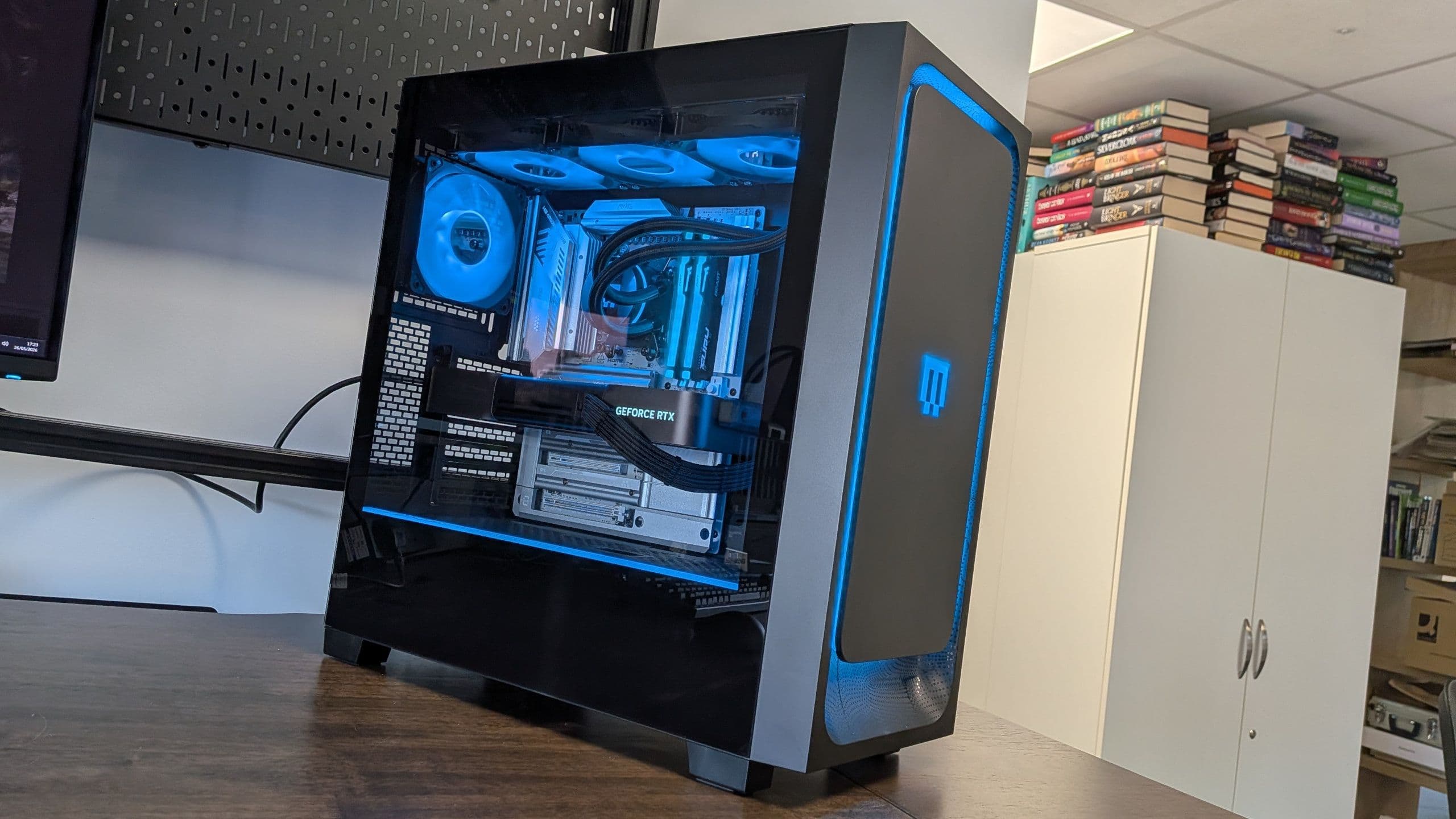
- Top configurations with RTX 5090 and Ryzen 9 9950X3D2 cost over $7,000, with base models starting at $1,999
- The MG-RC cable routing system creates an unobstructed interior view, but the chassis material feels less premium than the price suggests
- The 360mm AIO cooler struggles with the 9950X3D2 at full load, a notable weakness for content creators
What Maingear Built
US-based Maingear has been building custom PCs for 24 years. The MG-1 Mk.II is its latest gaming-focused desktop, and the company sent over a configuration that represents the bleeding edge: AMD's Ryzen 9 9950X3D2 Dual Edition processor with 192 MB of L3 cache, an Nvidia GeForce RTX 5090 Founders Edition, 32 GB of Kingston DDR5-6000 CL30 memory, and a 2 TB Samsung 9100 Pro Gen5 SSD.
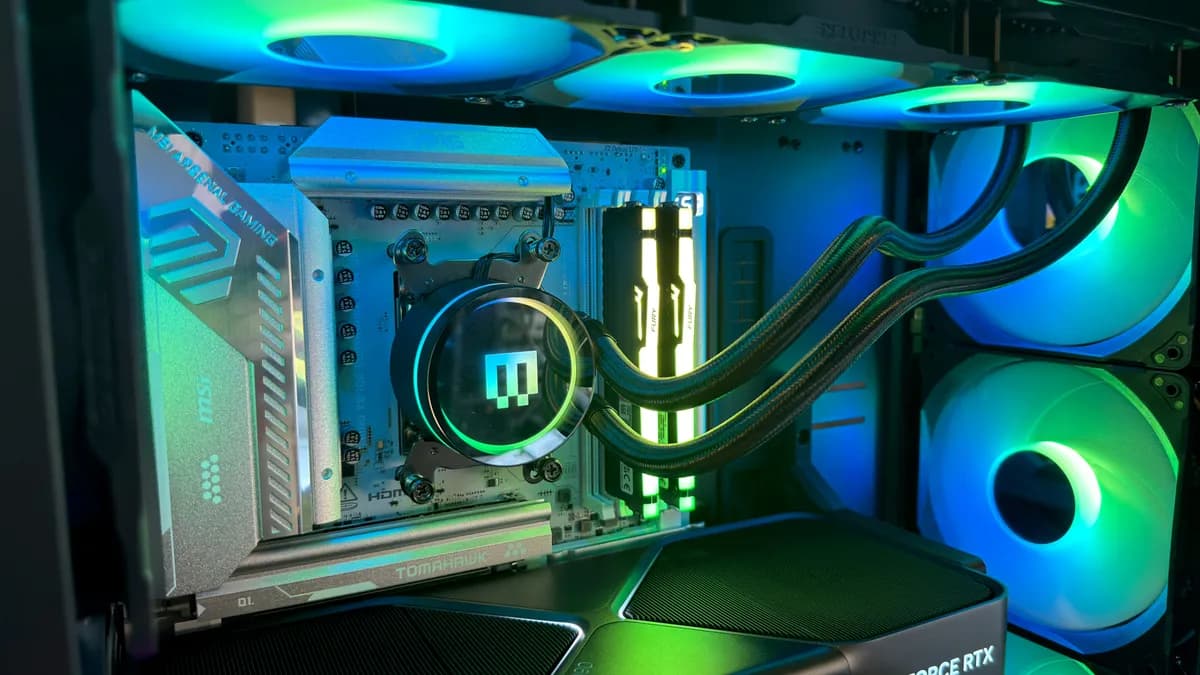
The motherboard is an MSI MAG X870E Tomahawk Max PZ, paired with an MSI MAG A1250GL power supply. Cooling comes from Maingear's Epic 360 RGB AIO with 120mm Phanteks D30 RGB fans, while three 140mm fans handle front intake.
That's the cost of matching the review unit's specs through Maingear's configurator. The closest prebuilt option, the Ultimate model, runs $7,199. Base configurations start at $1,999, which buys you the chassis and cable management expertise but with far more modest hardware.
The Cable Management Trick
Maingear's MG-RC (Reverse Connection) technology is the MG-1 Mk.II's party trick. All power and data cables route behind the motherboard, creating a completely unobstructed interior view. Open the side panel and you see components, not spaghetti.
“By moving the cable mess behind the motherboard, Maingear has essentially solved the biggest visual headache in PC building.”
— Tech Analyst, Hardware Review Weekly
The GPU mount is rock-solid, preventing sag on heavy cards like the RTX 5090 Founders Edition. Interior cabling is very tidy. And Maingear offers custom "Vibe" front panel options for those who want to display artwork or designs on their machine.
The Premium Problem
Here's where the MG-1 Mk.II runs into trouble. At $7,000+, buyers expect every detail to feel expensive. The chassis doesn't. PC Gamer's review notes that while the build quality is excellent, the case itself "feels cheap" and lacks the premium heft expected at this price bracket.
This disconnect between pristine internals and questionable exterior materials is a recurring theme in boutique PC debates. Reddit users on r/pcmasterrace have praised Maingear's use of non-proprietary parts and upgrade-friendly design, but many remain skeptical about paying thousands extra versus building a similar system themselves.
✅ Pros
- • Outstanding cable management with MG-RC technology
- • Standard, upgradeable components without proprietary parts
- • Rock-solid GPU mount prevents sag
- • Custom front panel options
- • Extreme performance from 9950X3D2 and RTX 5090 pairing
❌ Cons
- • Chassis feels cheap despite premium pricing
- • 360mm AIO struggles to cool 9950X3D2 at full load
- • Base configuration still expensive at $1,999
- • Limited front I/O options
Performance and Thermals
The hardware inside delivers. The Ryzen 9 9950X3D2's 192 MB of 3D V-Cache makes it a gaming monster, and paired with the RTX 5090, this configuration handles anything you throw at it.
Thermal performance is more nuanced. The three 140mm front intake fans provide strong airflow at reasonable noise levels. But the Maingear Epic 360 RGB AIO cooler struggles with the 9950X3D2 at sustained full load. For gaming, this is rarely an issue. For content creators running heavy multi-threaded workloads, the thermal ceiling could limit performance.
“The MG-1 Mk.II sets a new benchmark for what a boutique prebuilt should be: standard parts, zero bloatware, and impeccable cable management.”
— Nick Evanson, Senior Hardware Editor at PC Gamer
Connectivity and Expansion
Front I/O includes one USB 3.2 Gen 1 Type-A port, one USB 3.2 Gen 2 Type-C port (20 Gbps), and a 3.5mm combo audio jack. Some users find this limited for a premium build.
The rear panel is more generous: four USB 2.0 ports, three USB 3.2 Gen 1 Type-A, two USB 3.2 Gen 2 Type-A (10 Gbps), one USB 3.2 Gen 2 Type-C, and two USB4 ports at 40 Gbps. Networking covers Realtek 8126 5G LAN and Wi-Fi 7.
The Boutique Tax Debate
Every boutique PC review leads to the same question: is the premium worth it? Maingear's value proposition centers on cable management, quality control, and the convenience of receiving a fully built, tested system.
For buyers who can build their own PC, the math often doesn't work out. The same components might cost $5,000-5,500 purchased separately, leaving $1,700+ as the "boutique tax" for Maingear's labor and expertise.
For those who want a turnkey system with zero bloatware and guaranteed compatibility, Maingear delivers. The question is whether the chassis materials match the price.
Specifications at a Glance
- CPU: AMD Ryzen 9 9950X3D2 Dual Edition
- GPU: Nvidia GeForce RTX 5090 Founders Edition
- RAM: 32 GB Kingston Fury DDR5-6000 CL30
- Storage: 2 TB Samsung 9100 Pro Gen5 SSD
- Motherboard: MSI MAG X870E Tomahawk Max WiFi PZ
- PSU: MSI MAG A1250GL PCIE5
- Cooling: Maingear Epic 360 RGB AIO
- Dimensions: 477 x 499 x 230 mm
- Weight: 18.1 kg (40 lbs)
Logicity's Take
Frequently Asked Questions
How much does the Maingear MG-1 Mk.II cost?
Base configurations start at $1,999. Top-tier builds with RTX 5090 and Ryzen 9 9950X3D2 run over $7,000, with the reviewed configuration priced at $7,273.
Does the Maingear MG-1 Mk.II use proprietary parts?
No. Maingear uses standard, off-the-shelf components that can be upgraded or replaced independently.
What is MG-RC cable management?
MG-RC (Reverse Connection) routes all power and data cables behind the motherboard, creating a clean, unobstructed view of components inside the case.
Can the cooler handle the Ryzen 9 9950X3D2?
The included 360mm AIO handles gaming workloads well but struggles with the 9950X3D2 at sustained full load during content creation tasks.
Is the Maingear MG-1 Mk.II worth the price?
For buyers who value pristine cable management and turnkey delivery, it offers genuine benefits. DIY builders can achieve similar performance for $1,500-2,000 less.
More on the latest Nvidia hardware partnerships
Need Help Implementing This?
Source: PCGamer latest
Manaal Khan
Tech & Innovation Writer
Produced with AI assistance and reviewed by the Logicity editorial team. Learn more in our Editorial Policy.