Key Takeaways
- ChatGPT Pro users in the US can now connect financial accounts through Plaid for personalized advice
- The integration supports 12,000+ financial institutions including Citi, Chase, Robinhood, and Affirm
- ChatGPT can only read balances, transactions, investments, and liabilities. It cannot see full account numbers or make changes
OpenAI is turning ChatGPT into a personal finance assistant. The company has launched a preview feature that lets Pro users in the US connect their bank accounts, credit cards, and investment accounts directly to the chatbot.
The goal is simple: move from generic money advice to personalized guidance based on your actual financial situation. OpenAI says more than 200 million users already ask ChatGPT about managing money each month. Now those conversations can reference real account data.
How the Integration Works
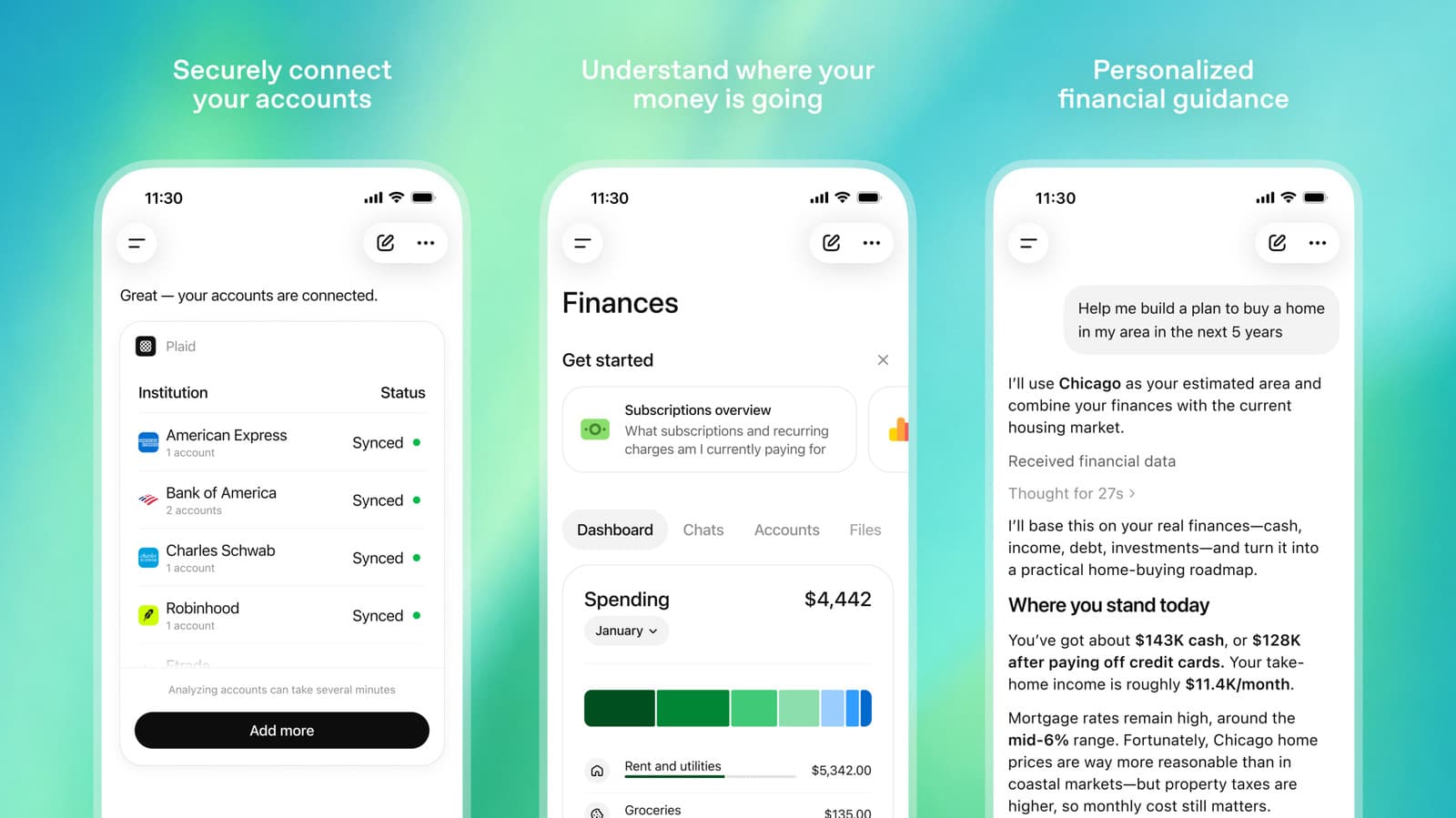
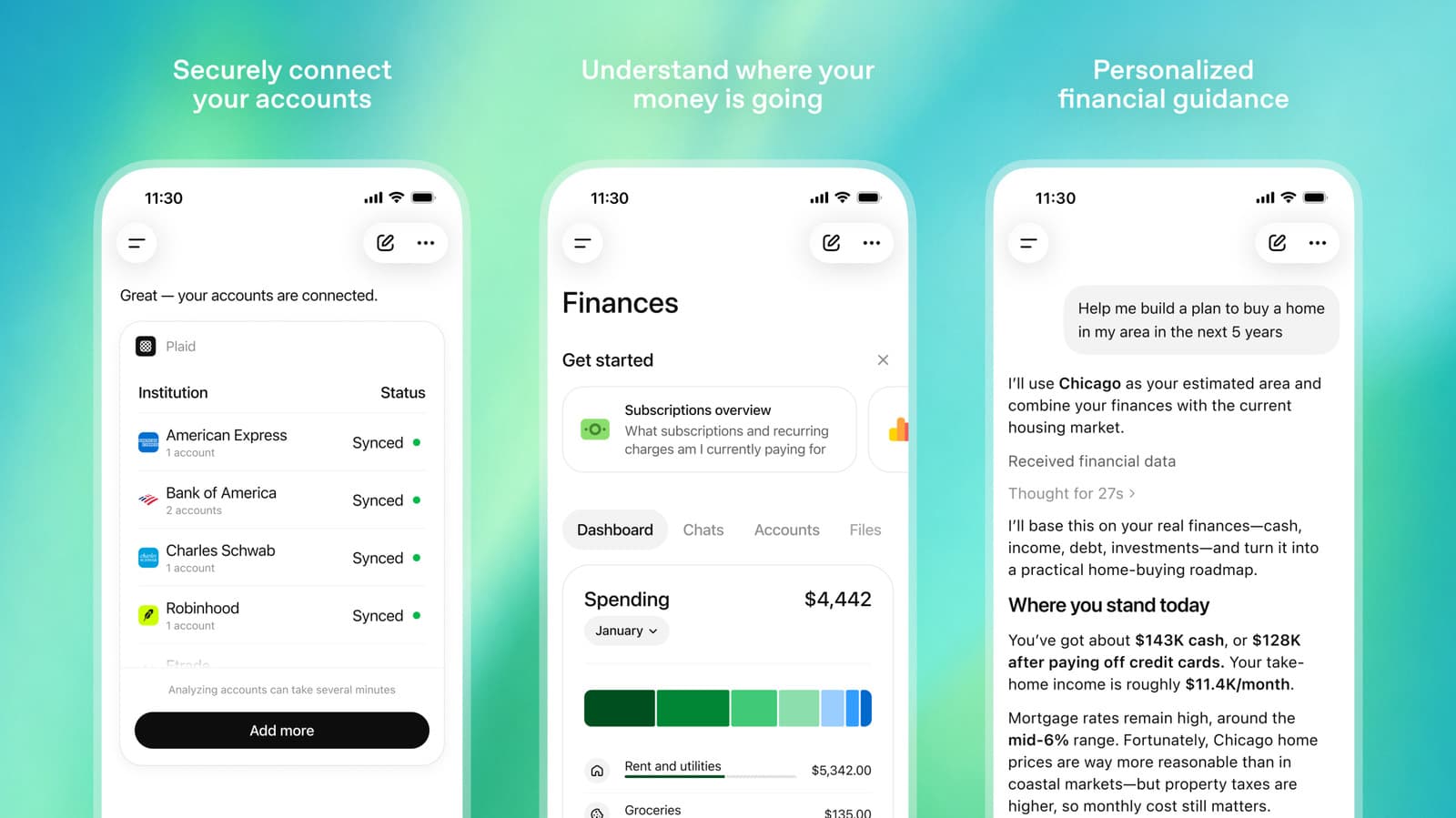
The feature runs through Plaid, the fintech infrastructure company that powers account connections for thousands of apps. Plaid offers links to more than 12,000 financial institutions, from major banks like Citi and Chase to investment platforms like Robinhood and buy-now-pay-later services like Affirm.
To get started, look for the "Finances" section in ChatGPT's sidebar. You can also type a prompt like "@Finances, connect my accounts." ChatGPT then walks you through Plaid's standard account linking flow.
Once connected, the chatbot builds a visual dashboard showing your financial picture. OpenAI says this process may take a few minutes. From there, you can use suggested prompts or ask your own questions about spending, savings, investments, or debt.
What Data ChatGPT Can and Cannot See
OpenAI has set clear boundaries on data access. ChatGPT can read your account balances, transaction history, investment holdings, and liabilities. It cannot see full account numbers. It cannot initiate transfers, payments, or any other changes to your accounts.
- Can see: balances, transactions, investments, liabilities
- Cannot see: full account numbers
- Cannot do: make changes or transactions on your accounts
Users can disconnect their accounts at any time through the Finances section. Any memories ChatGPT saves about your financial situation can be viewed or deleted from the same place. These financial memories are also blocked from temporary chats.
If you've already configured OpenAI's data controls to prevent your conversations from training future models, those settings apply to the finance feature too. Your prompts and financial data won't be used for model training.
More details on the Plaid partnership and account linking process
Timing and the Hiro Acquisition
OpenAI recently acquired Hiro, a fintech startup that built an AI-powered financial planning tool. But according to an OpenAI spokesperson, work on this ChatGPT feature started before that deal closed.
The company is starting with Pro subscribers only. It plans to expand to Plus users later, though no timeline was given.
“We're starting with a preview to a smaller group so we can learn from real-world use, improve the experience, and expand thoughtfully.”
— OpenAI
Privacy Concerns Are Real
Connecting your bank accounts to an AI chatbot is a significant trust decision. Plaid has faced scrutiny over data practices in the past, settling a class-action lawsuit in 2022 over allegations it collected more financial data than necessary.
OpenAI's read-only access and explicit data controls address some concerns. But users should understand that their transaction history reveals patterns about their lives, from where they shop to their health spending to their political donations. That data now flows through both Plaid and OpenAI's systems.
Coverage of the broader ChatGPT finance launch
Logicity's Take
Frequently Asked Questions
Which ChatGPT users can access the finance feature?
Currently only Pro subscribers in the United States have access. OpenAI plans to expand to Plus subscribers later.
Can ChatGPT move money or make transactions?
No. ChatGPT has read-only access. It can see balances and transactions but cannot initiate any changes to your accounts.
How do I disconnect my bank accounts from ChatGPT?
Go to the Finances section in ChatGPT's sidebar. You can disconnect accounts and delete any saved financial memories from there.
Will my financial data be used to train AI models?
If you've opted out of data training in OpenAI's settings, that preference applies to the finance feature. Your prompts and data won't be used for training.
Which banks and financial services are supported?
The integration works through Plaid, which connects to over 12,000 institutions including Citi, Chase, Robinhood, and Affirm.
Need Help Implementing This?
Source: Engadget
Huma Shazia
Senior AI & Tech Writer
Produced with AI assistance and reviewed by the Logicity editorial team. Learn more in our Editorial Policy.